You might not exactly be surprised to learn that photography as a craft is extremely challenging, both technically and artistically ... but I sure was.
Back in 2001, a 19-year-old version of me got a super-unwise Best Buy credit card, and immediately purchased the most reasonably-priced digital camera they had in stock: A Sony DSC-P50. It was ... a piece of shit. I mean, by today's standards, obviously: 2.1 megapixel output (basically one-quarter of the phone that's currently in your pocket), with a proprietary memory card that held roughly 25 photos, and 3x optical zoom.
But beyond just the technological limitations of the era, it also just kinda ... sucked at taking pictures. Especially the low-light, night-time photos that I was prone to taking while wandering around with friends, being a teenager and all. The other part of that equation was that the kid behind the camera also sucked at taking pictures. There were some good (or at least "interesting" pictures here and there, but overall, we were a really bad team.
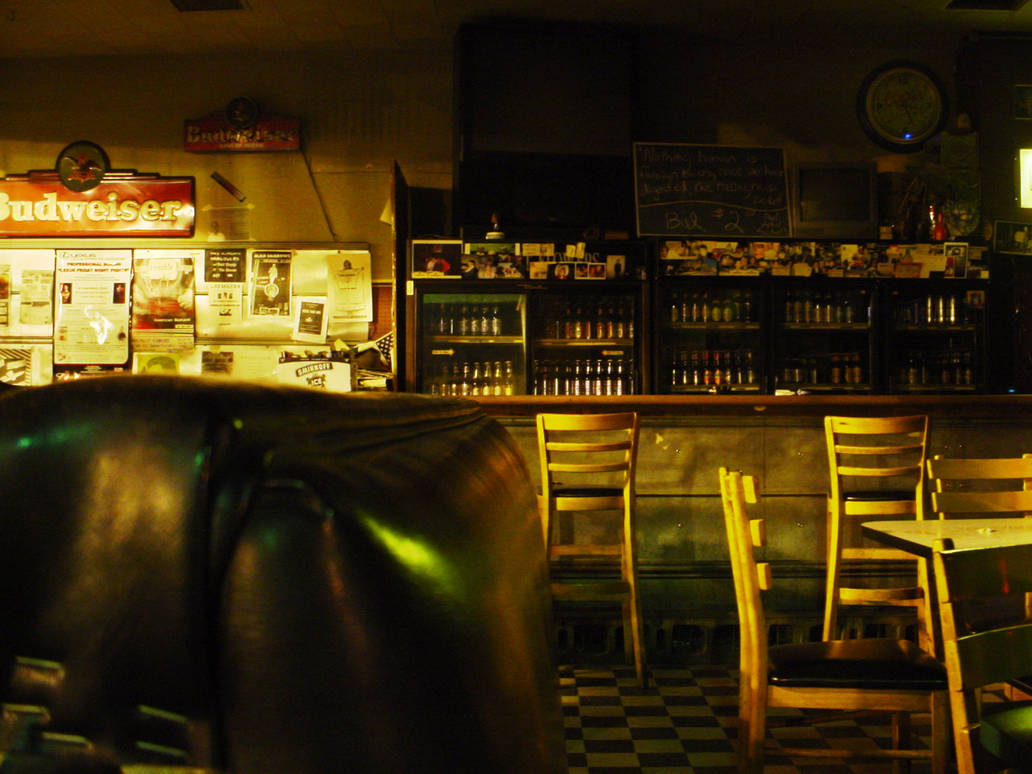
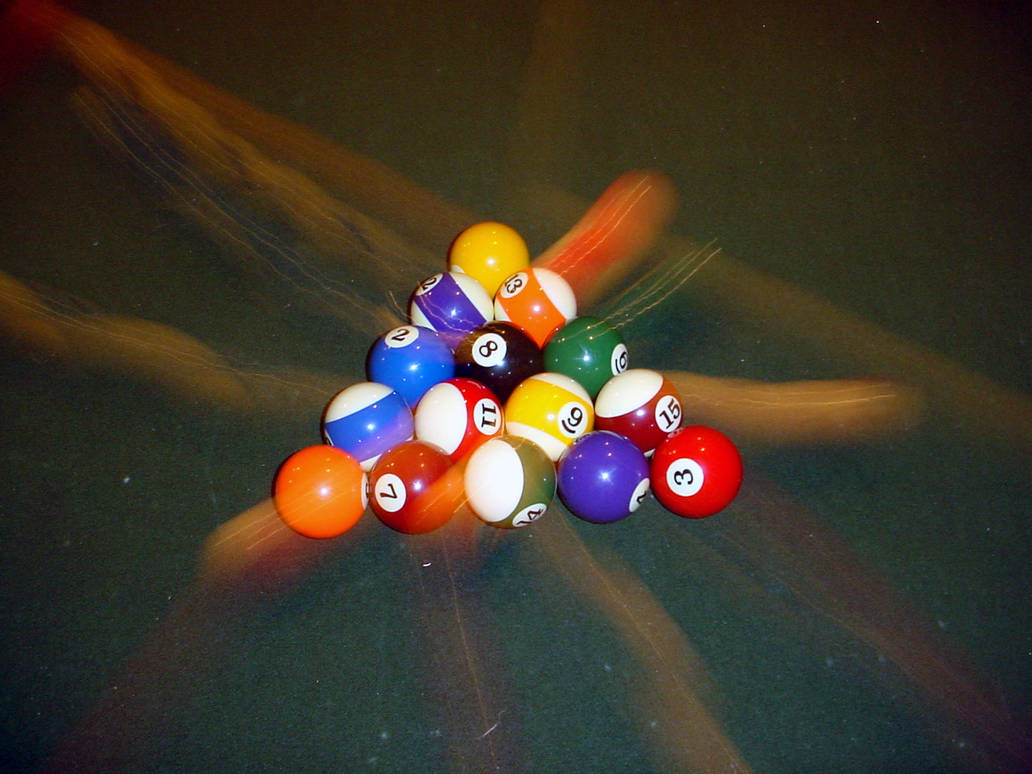
So I ... um, bought a copy of Photoshop 6.0 and started trying to use it to lighten my photos in a way that didn't blow them out. You see, Young Nick didn't quite understand that you can't simply make a computer see what the camera didn't capture. So all my photos just turned into this high-contrast pixel soup.
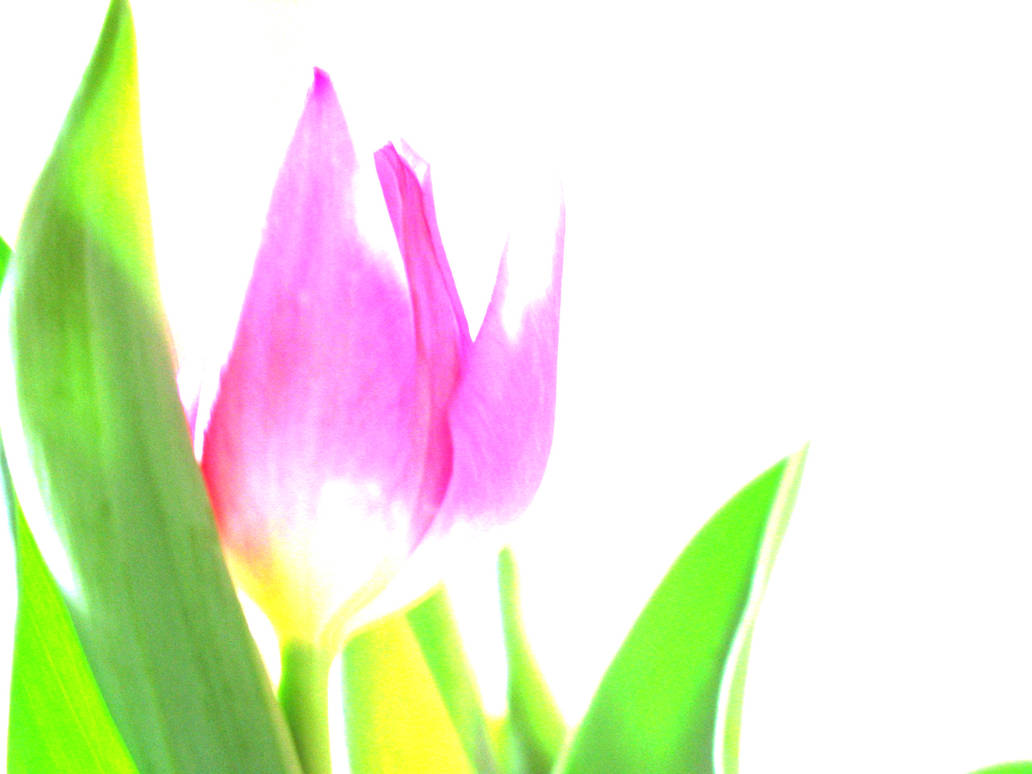
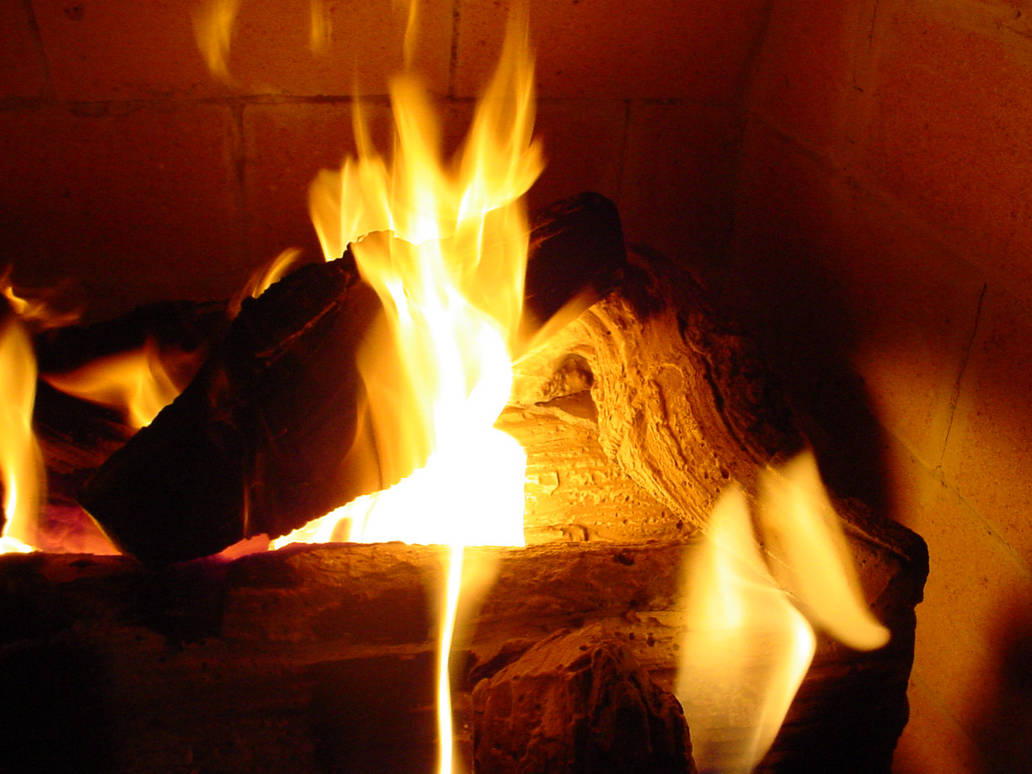
But over time, I started to develop a little bit of a personal style. Sure, partly out my frustration, and the limitations of my software, hardware, and self ... but partly out of taste as well. See, I've always been into abstract expressionism. No doubt, I have stood in absolute awe underneath some of the greatest representational, and even impressionistic paintings on the planet. I would give Rembrandt's "The Night Watch" and anything from Van Gogh's "Orchard" series as examples from my trip to Amsterdam. The technical detail is undeniable, and early in my practice I produced a lot of very representational works.
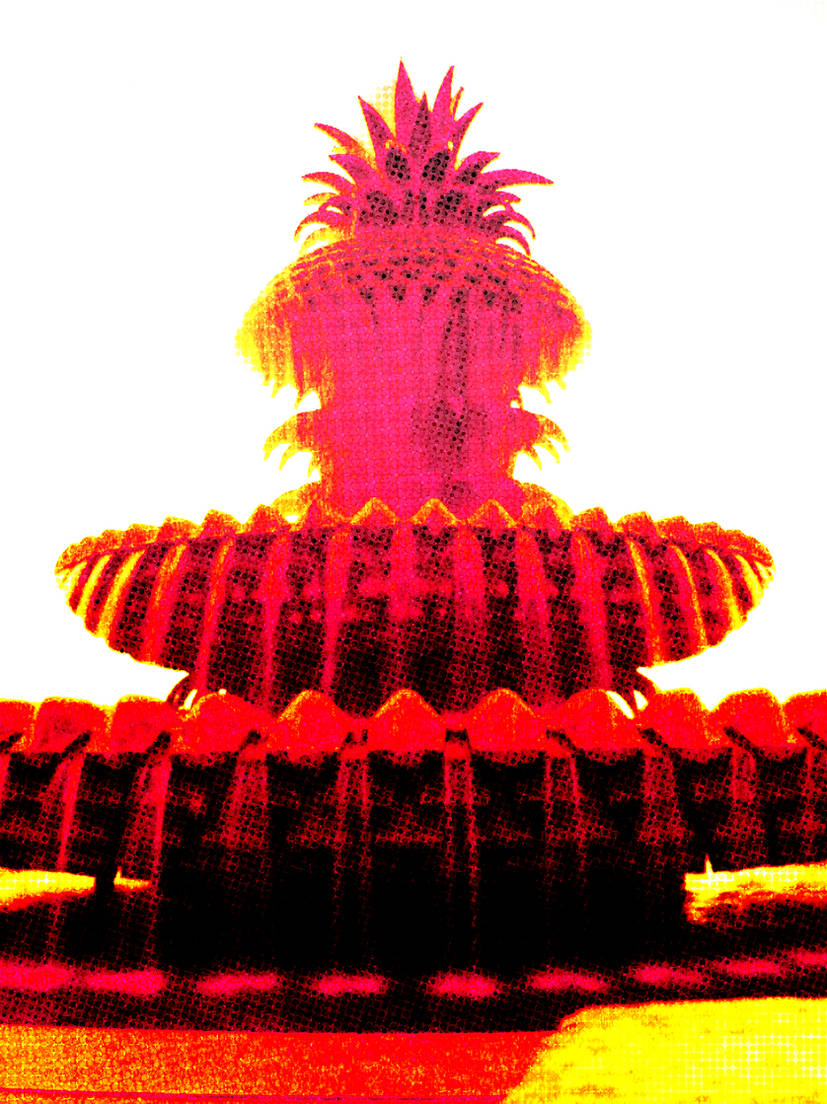
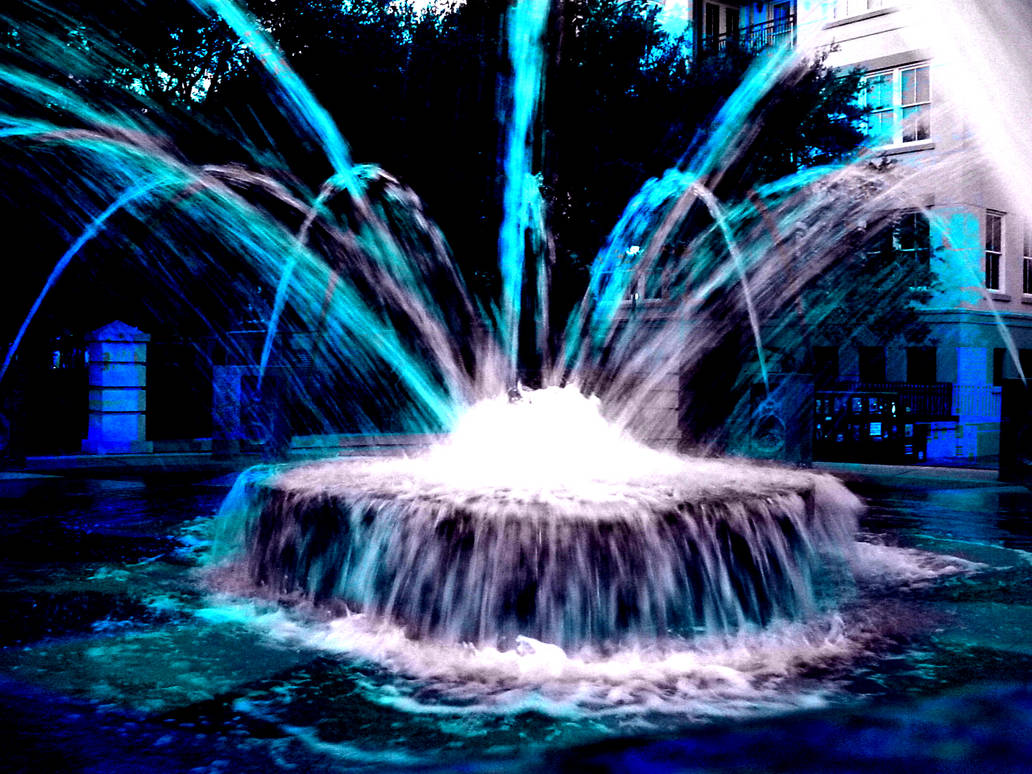
This period (roughly 2005-6, when I was living in South Carolina) was also when I started combining similar photos in pieces in a process that would eventually be called "photo bashing". Of course, part of this was the fact that I had to take several pictures anytime I wanted to get one "good" one, but also I started to really enjoy exploring the idea of using different perspectives of the same thing to create divergent ideas of what it looked like, or how it related to the space around it. But you can see from these early works that the ideas that underpin the artwork itself remain very similar to now, even though the capacity of every part of the workflow has increased exponentially.
Shortly after I separated from the Navy, I moved back home to Kentucky, and in (what seems now like) a desperate attempt to carve some thruline in my life, I started making physical art, but, owing to the fact that all my practice up to that point had been purely digital, I opted out of representative works, and tried to focus entirely on creating art that harnessed chaos and motion into one specific point in time.
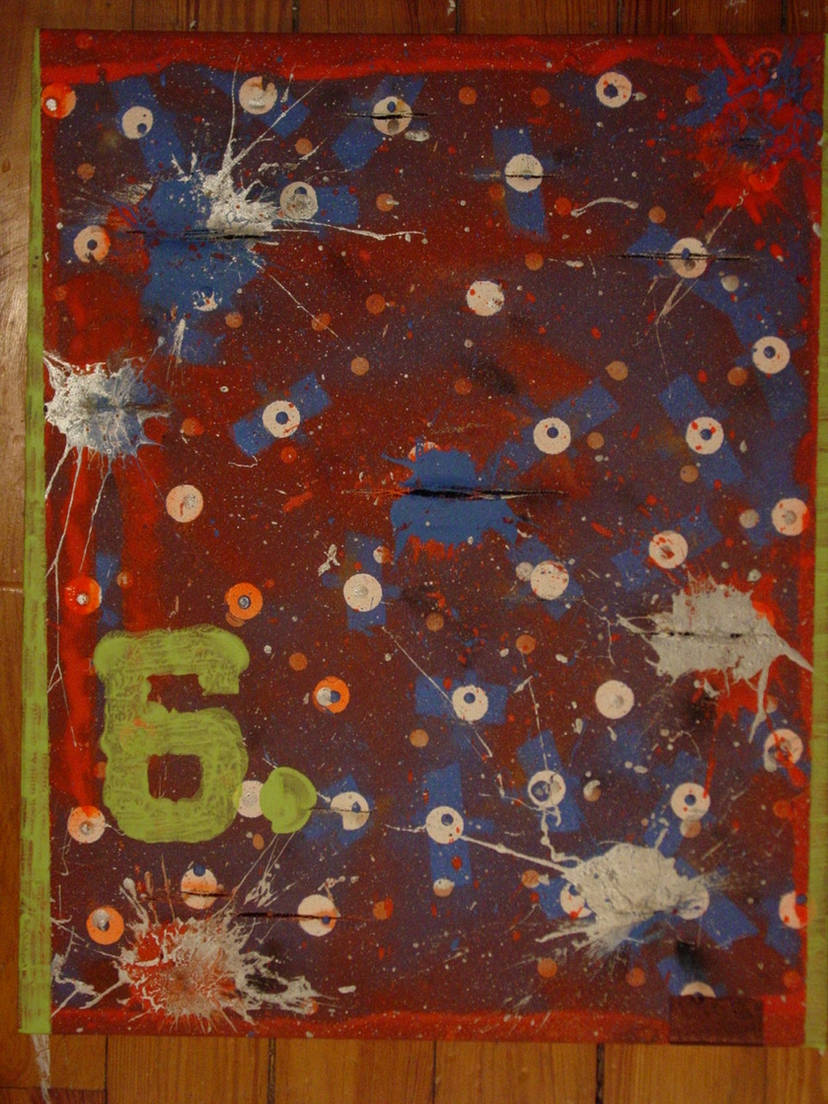
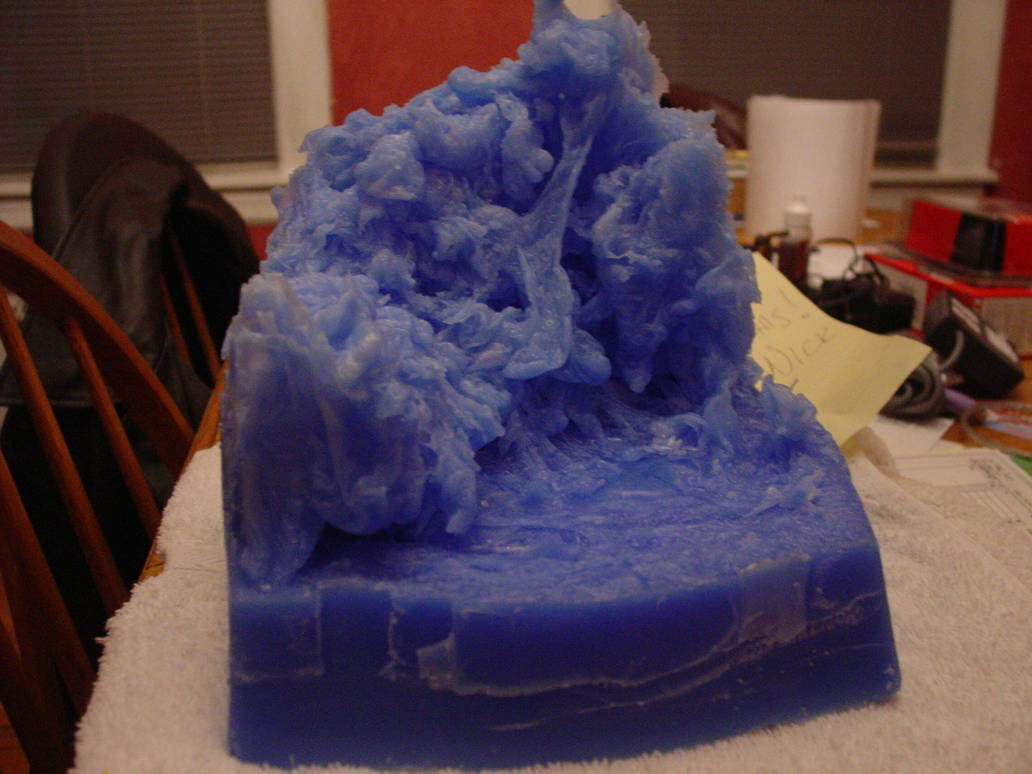
The painting on the left "Six (2006)" is one of the few that even survived the creation process, which in its case included tape, stickers, firecrackers, and spray paint; while the piece on the right was part of a series I called "Pyroclasts," (named for volcanic lava flows) in which I heated colored wax over a fire in my back yard and poured it into different containers to capture the resolidification process as it rapidly cooled.
This didn't "take," but it expanded the methods I was willing to use to create, and helped me to explore new starting points for exploring texture.
I wish I still had more photos of what I created with the giant PVC paint cannon (read: potato gun) and the handheld model rocket engine-propelled "paint gun" (read: pipe bomb) I made.
However, this also helped me to be more comfortable exploring what art I might make on the computer if I was forced to start with nothing, the same way I was when confronted with all the blank canvases that I had been filling. This led to some pretty interesting experiments:
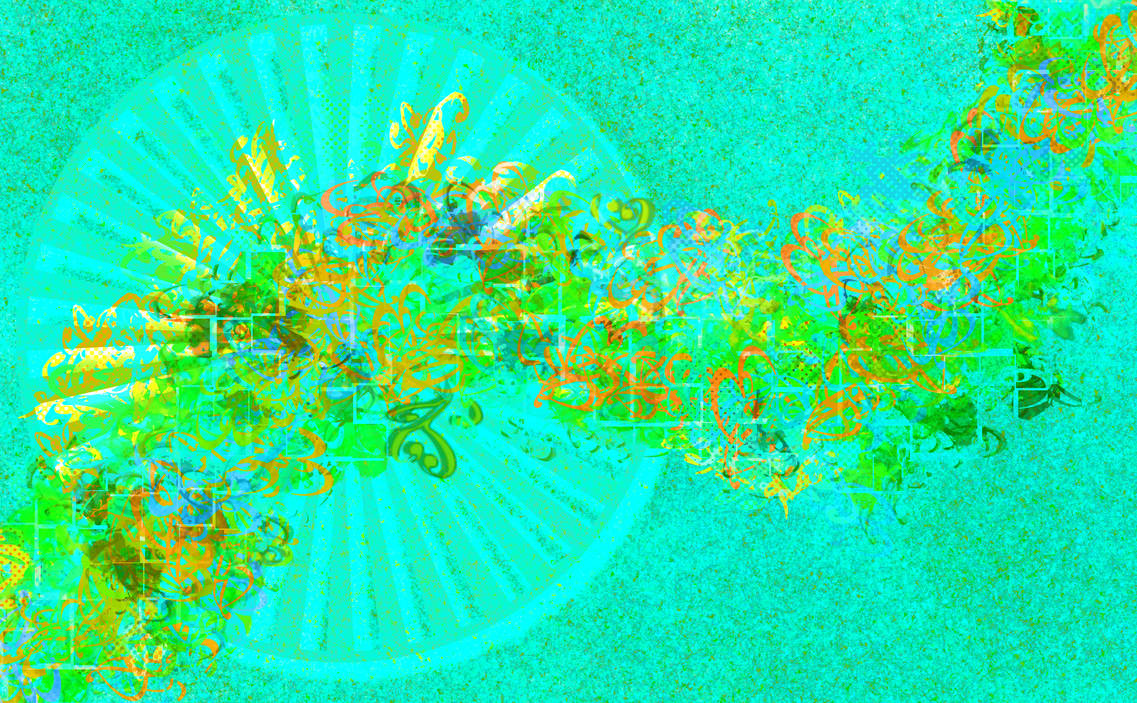
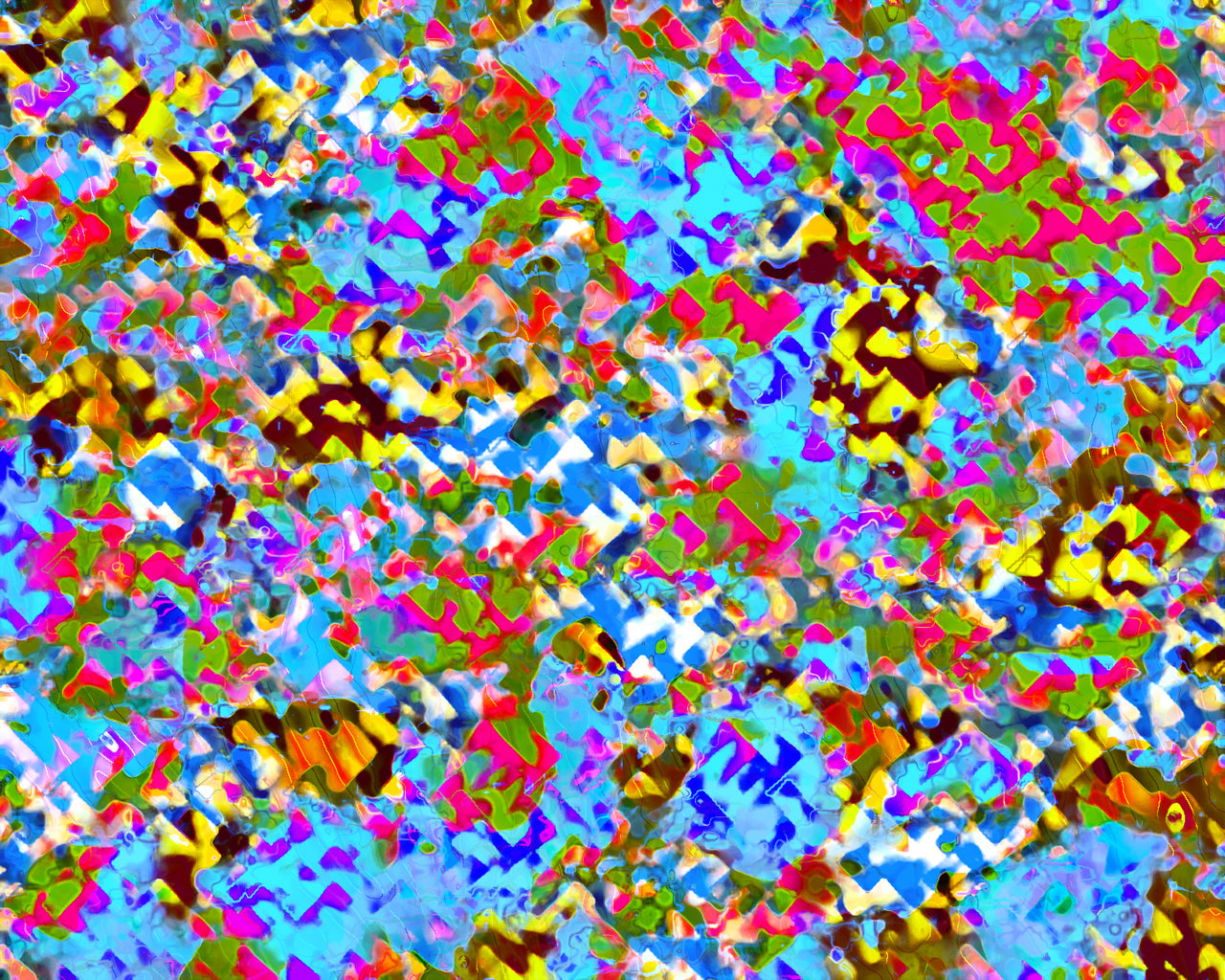
All that was left was to start putting it all together — I had gotten a new camera, this time a Canon Powershot S5 IS, and it was absolutely revelatory: 8 megapixels, image stabilization, a flip-out LCD viewfinder ... and thankfully, in the intervening time, I hadn't gotten any better at all as a photographer (lolsob). It was also around this time that I started "framing" and "signing" my artworks as I thought that was the difference that would make me look more "professional"
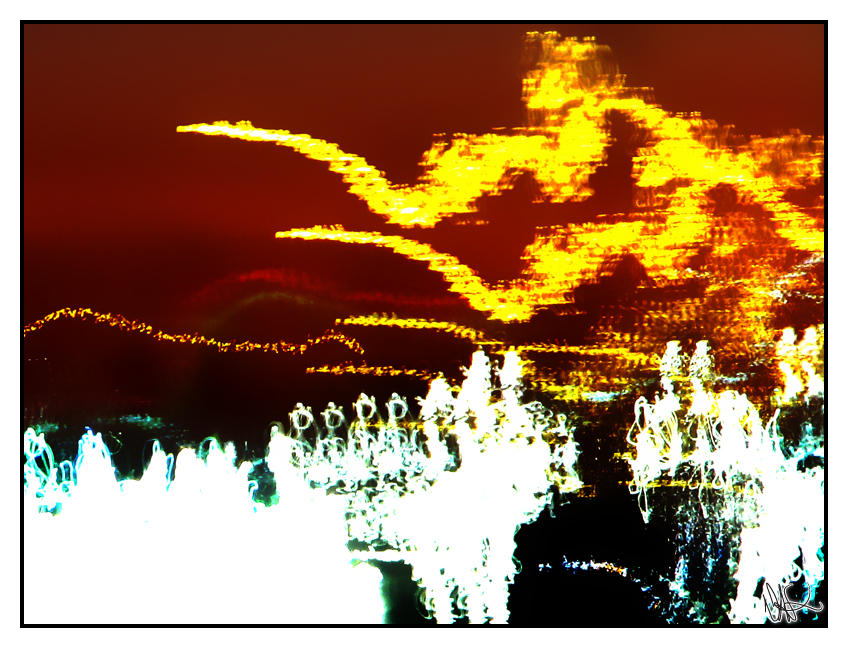
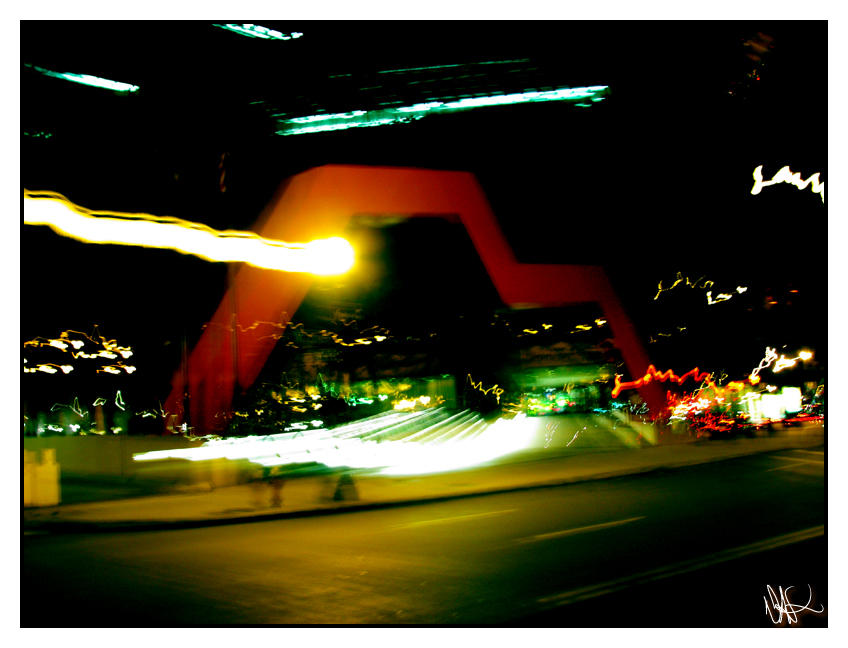
So, what's the answer to the question that blog title to ask? Well, after using the term "photomanipulations" for so long, and seeing what people had started to do with what was being called "photobashing," I started to feel like neither one really fully encapsulated what I was trying to do. However, it would be several years before I started to look for a real answer.
I came across the term "intuitive art" pretty early on as an expression of creating art that begins without a particular ending in mind, and I really appreciated that, as that was almost always my process: starting out with a photo or several, and combining them in different ways until I had come up with something visually compelling — but that still only really described the process more than the art.
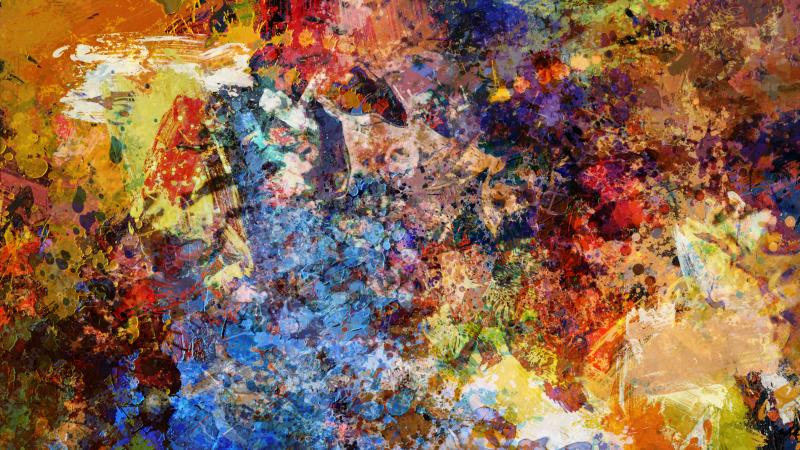
Then, sometime in 2021, I found my way to "photographic expressionism" through a community of photographic artists who had been using their own source material in similar way: taking their representative photos, and combining them into abstract works that had little, if anything to do with their component parts.
I was home.
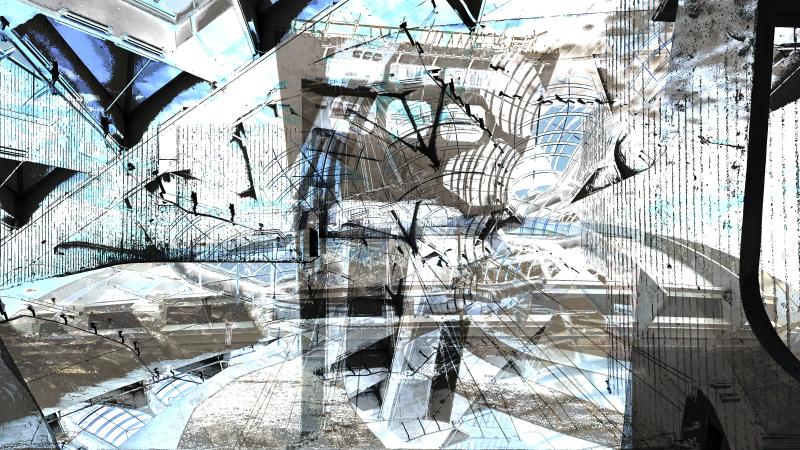
I think these pieces from my Montreal series really drive the point home in two different, but equal ways. {link: olympique} on the left is made up of several photos of the Olympic Park and Stadium built for the 1976 Summer games, while {link: asteroidea} is simply one photo of a starfish in the aquarium that I used Photoshop brushes to push well past its logical extreme.
Two pieces, two different intuitive approaches, one result: photographic expressionism. :)