The origin of the quote is unknown, but it tends to go something like this:
Given an infinite amount of time, a monkey hitting keys at random could produce the entire works of William Shakespeare.
... and it makes sense, right? Like, if you think about it, one monkey already has produced the entire works of William Shakespeare. It just happened to be William Shakespeare.
But this post isn't about William Shakespeare (or semantic satiation), it's about the anti-monkey: Large Language Models (LLMs), or as we've come to know them, "AI."
Like I've already said before, LLMs are fantastic at coding, and they're only getting better — with Anthropic's latest load-bearing release of Fable 5.1 yesterday, OpenAI's recent advances in their own tools, it feels like we inch closer to the quote-unquote "singularity" every day.
And yet, they continue to not be able to make art! Why? Because they can't feel! They are literally created to make the safest, most likely thing possible.
A lot has been said (and written) about "AI slop," and the fact that AI companies have committed countless acts of IP theft and outright plagiarism, and I'm not here to make those arguments anew.
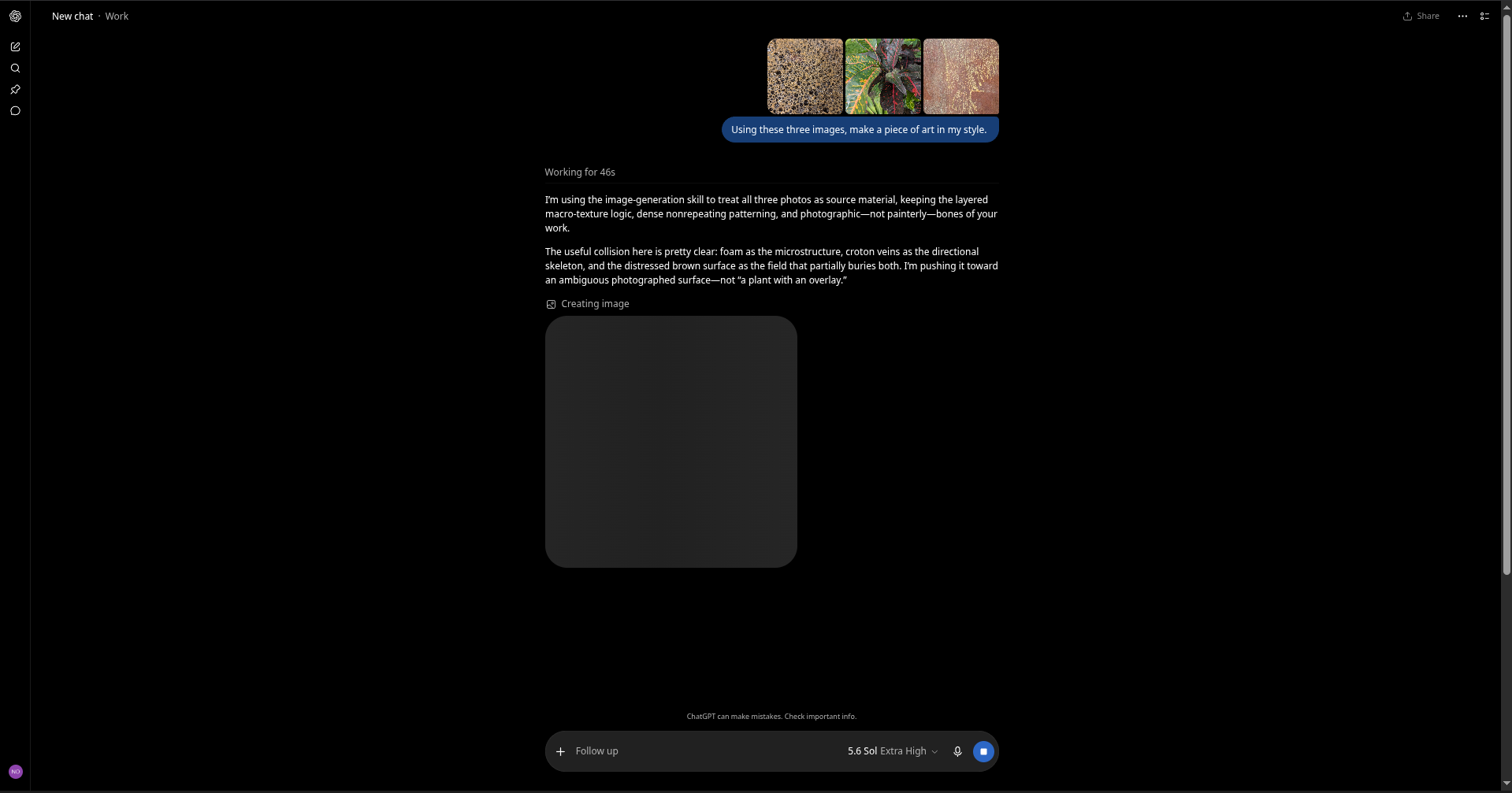
I want to talk about a counterargument to my own (namely, "AI can't make this (dot com)") which is that you could prompt for the imperfections that are found in the things I make: that you, or indeed, an AI agent, if given enough time and computing power, could arrive at the same place I do through careful trial and error.
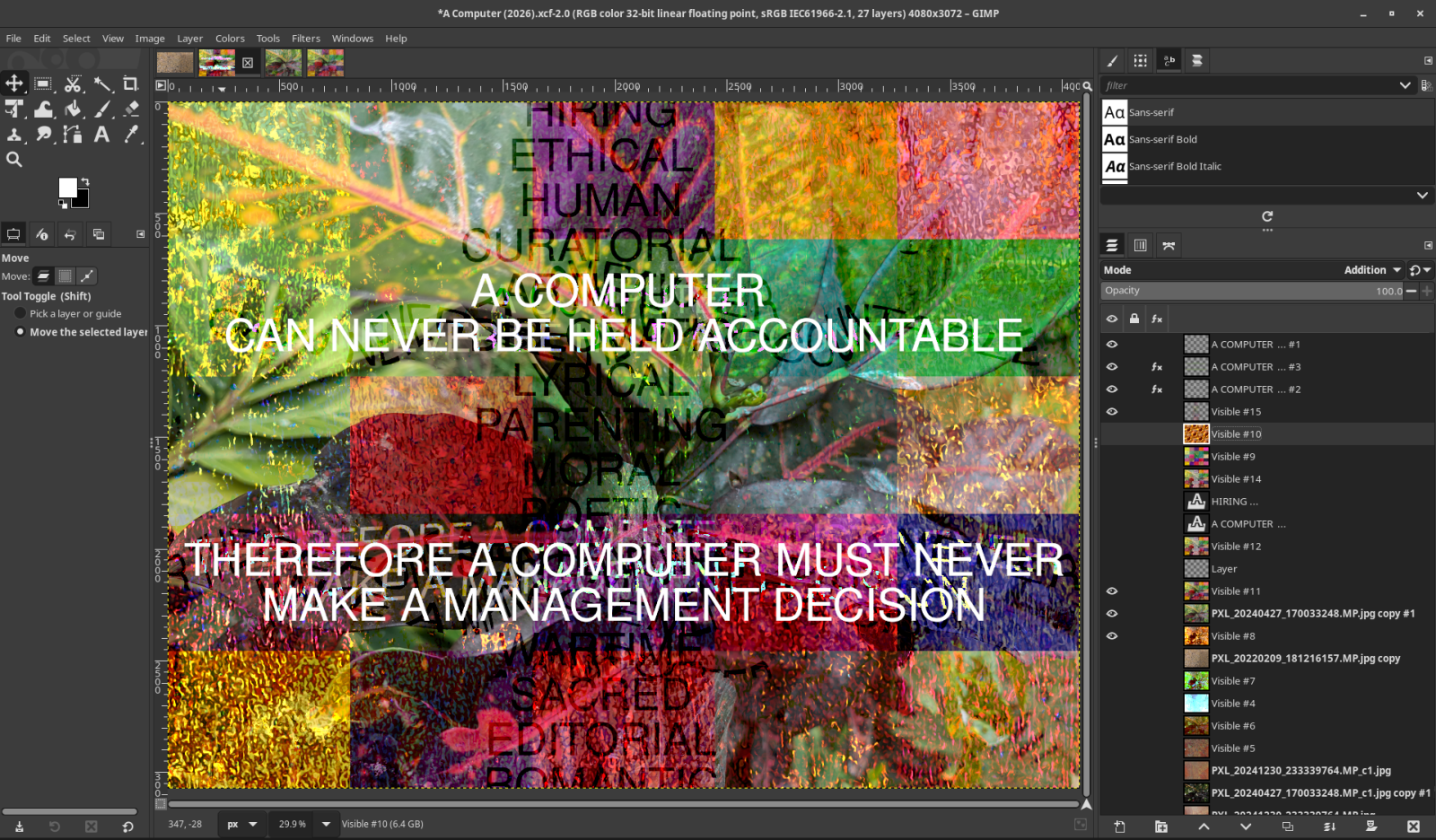
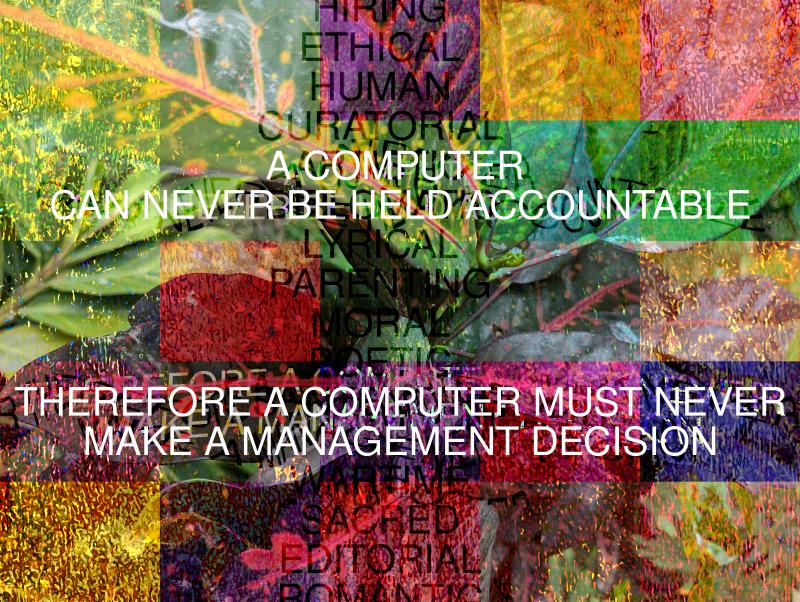
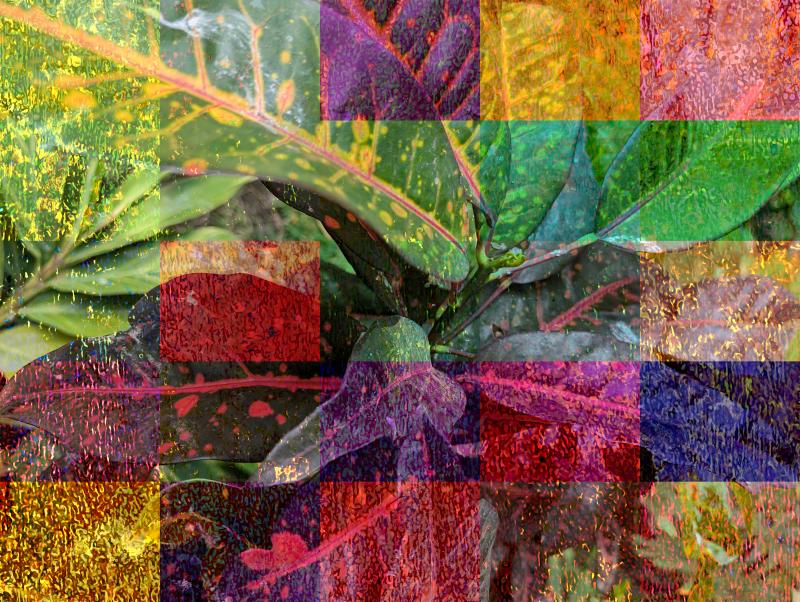
Where would you start? Would you start by having it imagine a photo of a plant you don't know the name of, a tray of soapy bubbles, and a deteriorated wall in a hotel in Elizabethtown, Kentucky? Would you know how to combine them, or would you let the computer do it for you?
What would be the point? Sure, there's a great deal of bullshit AI-generated patterns on cheap pillows you can get from whichever exploitative online retailer you like best, and someone's out there making money off them.
But leaving aside the relentless pursuit of a billion dollars six at a time, would you set your monkey and his typewriter down this path?
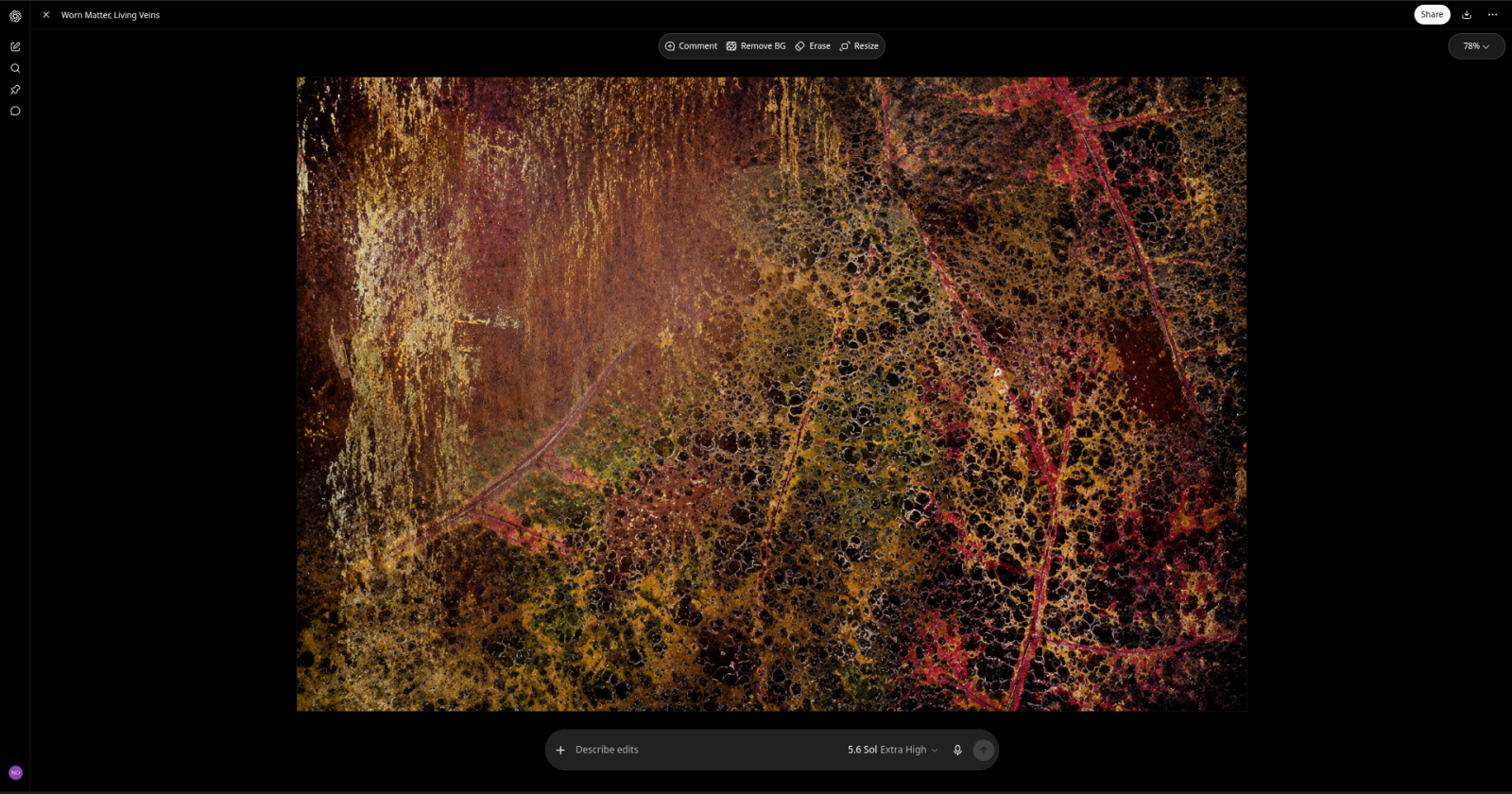
The reason I make my art, by and large, is to explore the way things make me feel. I'm unbelievably grateful that the things I make seem to resonate with others, but I can not imagine feeling that same gratitude if I had sat in front of a black box and told it what to make for me in the hopes that I might make some money from it.
(And, yeah, there is 100% an element of privilege there that I don't have to rely on the black box to make the things that feed my family, but ... no.)
The point of this is that even if the monkey typed out all the works of Shakespeare one day, he wouldn't understand what he'd written. AI is exactly the same. No matter how many "renowned thinkers" fall into the trap of telling the mechanical parrot to say "I'm alive" and then telling us they played themselves, there is no machine that can satisfy the human urge to create.
There is, of course, a nuanced argument to make here about the way that we can use AI/LLMs to write discrete code that produces things, that's a loooong day at the office for someone who's not getting paid to write this blog.
Suffice it to say: Art isn't a destination. It's a process. Six dollar drop-shipped pillows are a destination, a product; they're not art, even though they have all the component parts.
AI may one day be able to replicate the style of what I do, but it will never have meant to.